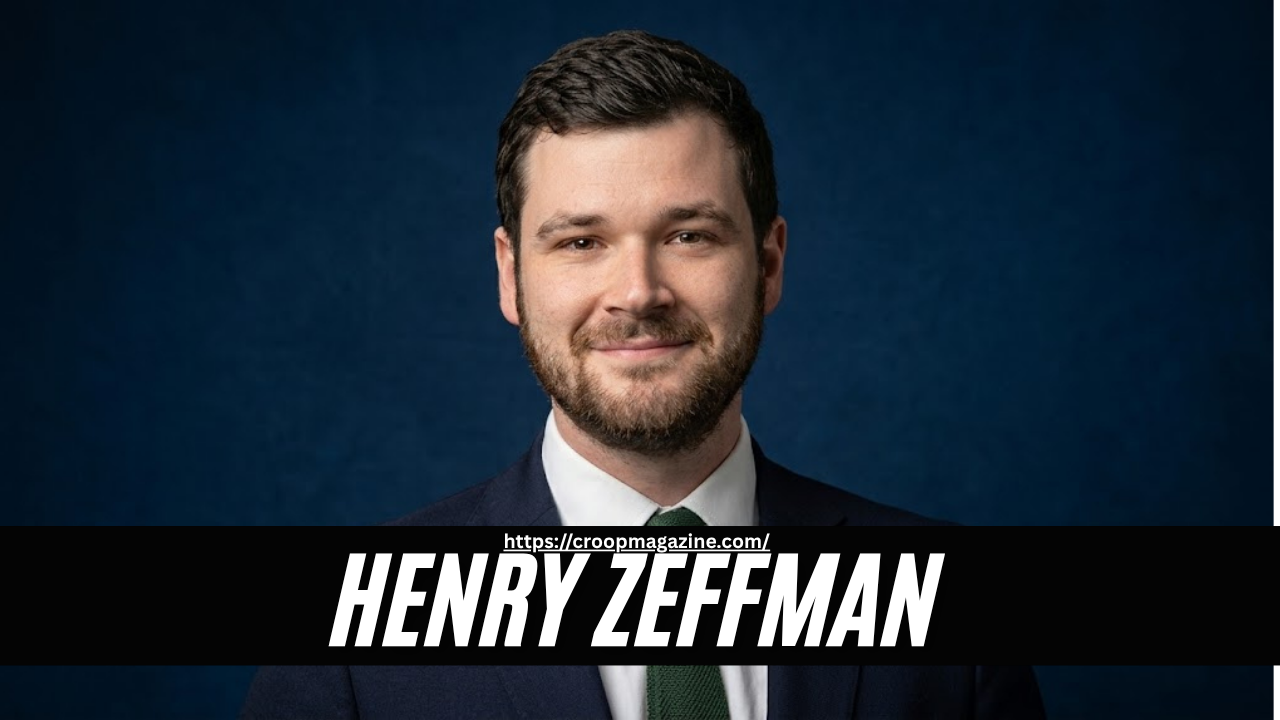
Henry Zeffman has become one of the most closely watched political journalists in the United Kingdom, not because he seeks attention, but because of where he stands in the news ecosystem. As BBC News Chief Political Correspondent, he operates at the point where government decisions, party strategy, and public accountability meet. His reporting is not about personality-driven commentary. It is about explaining how power moves through Westminster and what it means for people outside it.
What sets him apart is the combination of elite academic training, early recognition in journalism, and a steady rise through some of the most influential newsrooms in British media. His career reflects how modern political reporting has shifted toward speed, clarity, and constant interpretation of fast-moving events.
Early education and formative environment
Henry Zeffman grew up in London in a household and school environment that encouraged academic discipline and curiosity about public affairs. He attended Highgate School, where exposure to debate, writing, and structured thinking shaped his early interests.
His academic path led him to the University of Oxford, where he studied Philosophy, Politics and Economics at Brasenose College. That degree is known for producing many of the UK’s political journalists and policymakers, largely because it trains students to think across systems rather than single subjects. At Oxford, Zeffman’s interest in journalism began to take clearer shape. He was not focused on celebrity reporting or lifestyle media. Instead, he gravitated toward political systems, institutional behavior, and how decisions are communicated to the public.
Early recognition in journalism
Before entering senior newsroom roles, Zeffman received one of the more respected early-career journalism awards in the UK: the Anthony Howard Award for Young Journalists in 2015. That recognition matters because it is not simply a prize. It places selected early journalists inside professional newsroom environments and gives them exposure to high-pressure reporting work. For Zeffman, it marked the transition from academic interest in politics to practical journalism in national media settings. From that point onward, his career was defined less by exploration and more by specialization in political reporting.
Building a career at The Times
Zeffman’s professional foundation was built at The Times, one of Britain’s most established newspapers. His role there focused on political reporting, particularly the internal dynamics of Westminster. Covering UK politics at a national newspaper is not a passive job. It involves tracking legislation, interpreting briefings, analyzing party strategy, and often reading between lines that politicians do not fully explain. Zeffman’s work in this environment developed a reputation for clarity and structure rather than opinion-heavy writing.
Over time, his responsibilities expanded. He moved into senior political reporting positions and eventually worked as Washington correspondent. That assignment shifted his focus to American politics, where he reported on US elections and political transitions while maintaining a UK political lens for British readers. This international experience added depth to his reporting style. It exposed him to different political systems and communication cultures, which later became useful in explaining comparisons between UK and US politics.
After returning from Washington, he took on a senior editorial role as Associate Political Editor at The Times. At that stage, he was not only reporting politics but also shaping how political coverage was structured within the newsroom.
Transition to BBC News
In 2023, Zeffman moved to BBC News, taking on the role of Chief Political Correspondent. This position placed him at the center of one of the most visible political reporting teams in the UK. At the BBC, his work is focused on Westminster coverage. That includes government announcements, parliamentary developments, leadership politics, and major national policy shifts. The role requires constant presence in fast-moving political environments where information changes rapidly and accuracy is critical.
The move from print journalism to broadcast journalism also reflects a broader shift in media consumption. Political reporting is no longer confined to newspapers. It now operates across television, digital platforms, and live updates, requiring journalists to explain developments in real time. Zeffman’s reporting at the BBC is built around that demand for speed without losing clarity.
Reporting style and approach to political journalism
Zeffman’s style is often described as structured and explanatory rather than interpretive. He does not rely heavily on dramatic framing or personal commentary. Instead, his work focuses on breaking down political events into understandable components. That approach matters in UK politics, where decisions are often shaped by procedural detail, party negotiations, and institutional constraints. Without clear explanation, much of that process becomes difficult for the public to follow.
His reporting tends to focus on three consistent questions: what has changed, who made the decision, and what happens next. That structure helps translate complex political moments into information that audiences can use rather than just observe. There is also a discipline in his tone. Even in fast-breaking political situations, the emphasis remains on accuracy and context rather than reaction.
Recognition and professional standing
Zeffman’s reputation in journalism has been built over time rather than through a single defining moment. Early recognition through awards helped establish credibility, but his professional standing comes from consistent newsroom performance across different roles and countries.
His time at The Times placed him within one of the UK’s most competitive political desks. His move to Washington added international reporting experience. His current BBC role places him in one of the most visible political journalism positions in the country. Each stage of his career shows progression into more complex and higher-responsibility reporting environments.
Public presence and professional identity
Despite working in a high-profile role, Zeffman maintains a relatively low personal profile. He does not operate as a media personality outside his reporting duties, and there is limited public focus on his private life. That separation between professional and personal identity is common among political correspondents. The credibility of their work depends less on personality and more on consistency, sourcing, and clarity. His public identity is therefore built almost entirely through reporting rather than public commentary or personal branding.
Why his role matters in UK politics
Political correspondents like Zeffman play a central role in how the public understands government decisions. Westminster is a system filled with procedural detail, negotiation, and shifting alliances. Without reporting that translates those developments, much of it remains inaccessible to most audiences.
His work helps bridge that gap by explaining not only what decisions are made, but how and why they are made. In a political environment where messaging is often controlled and selective, that explanatory role becomes increasingly important. The demand for clear political reporting has grown as political cycles have accelerated and public trust in institutions has become more closely scrutinized.
Conclusion
Henry Zeffman represents a modern form of political journalism built on clarity, consistency, and institutional reporting rather than personal visibility. His career has moved steadily from academic study to national newspapers and now to one of the most influential political reporting roles at the BBC.
His work sits at the center of how political information reaches the public. It is not driven by commentary or personality, but by the need to explain decisions that shape public life. As UK politics continues to shift rapidly, journalists in his position play an essential role in making those changes understandable in real time.