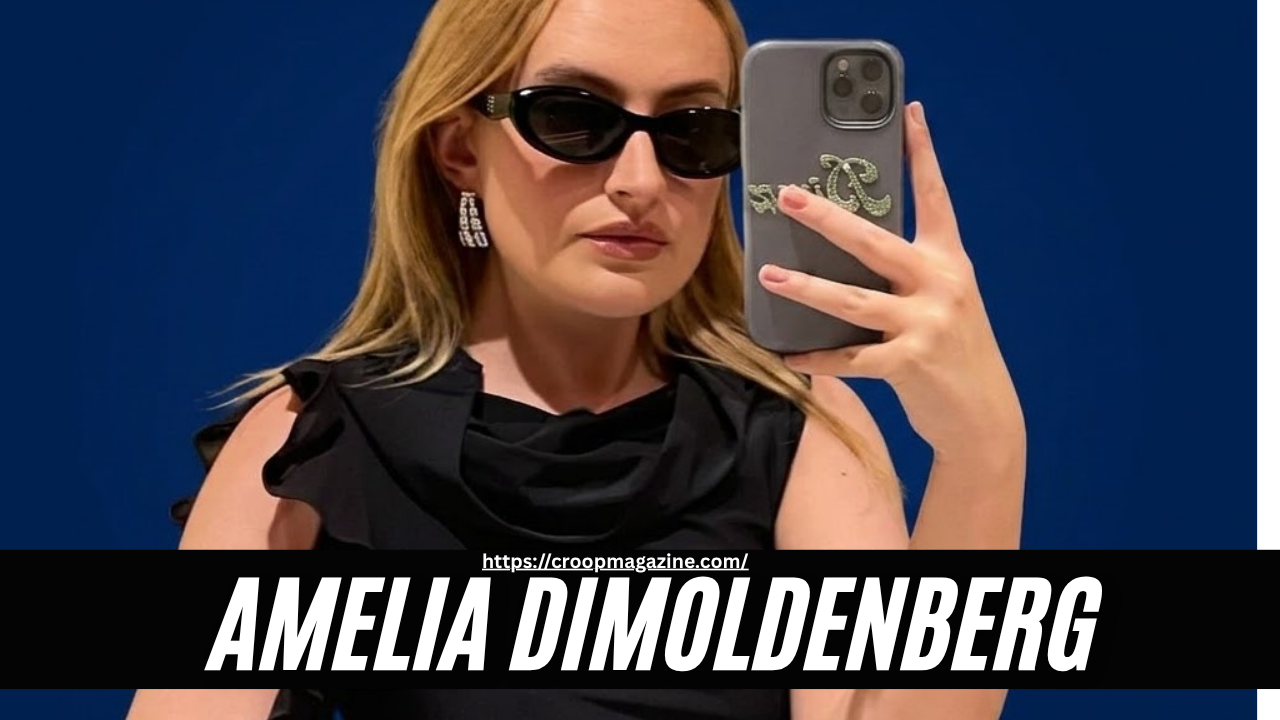
Amelia Dimoldenberg didn’t arrive in entertainment through the usual doors of stand-up clubs, sitcom auditions, or television panels. Instead, she built her name in a far more unusual way: by sitting across from celebrities in fried chicken shops and refusing to make things comfortable. That simple idea became Chicken Shop Date, a series that looks like a parody of dating culture but slowly evolved into one of the most recognizable interview formats online. What makes her work stand out is not just the concept itself, but the way she performs it—with long pauses, deadpan expressions, and a commitment to awkwardness that feels almost engineered to break traditional interview rules.
Today, Amelia Dimoldenberg is widely recognized as a British comedian, writer, and presenter. But her real influence lies in how she changed the tone of celebrity interviews for a digital generation that prefers honesty over polish and discomfort over scripted charm.
Early Life in London and Creative Curiosity
Amelia Dimoldenberg was born in London on 30 January 1994. She grew up in an environment that exposed her to both structure and creativity, and from a young age she showed interest in writing, communication, and media. Unlike many comedians who start by performing on stage, her early path was rooted in writing and visual storytelling. She was drawn to fashion, youth culture, and how personality is expressed through style and tone. That interest eventually led her toward studying Fashion Communication at Central Saint Martins, one of London’s most respected creative institutions.
At university, she didn’t immediately position herself as a performer. Instead, she explored how media language works—how interviews are framed, how tone shapes perception, and how personality can be constructed through conversation. These ideas would later become the foundation of her comedic identity. What she built later didn’t come from a sudden comedic breakthrough. It came from years of observing how people present themselves in structured environments.
The Origin of Chicken Shop Date
Chicken Shop Date began in 2014 as a small creative experiment. At the time, Dimoldenberg was working within youth media and writing interviews connected to music and culture. The shift from written interviews to video format opened up a new opportunity: performance. The idea behind the show was simple but unusual. Instead of hosting celebrities in studios or polished interview spaces, she would meet them in fried chicken restaurants and frame the conversation like a date.
The setting matters more than it seems. Chicken shops are informal, slightly chaotic, and not associated with glamour. That contrast immediately changes the tone of any interaction happening inside them. But the real creative decision wasn’t the location. It was the tone.
Dimoldenberg built a persona that is emotionally flat, intentionally awkward, and slightly unpredictable. She doesn’t rush to fill silence. She doesn’t overreact. She often lets moments stretch longer than most interviewers would allow. That pacing became the foundation of the entire series.
Why Awkwardness Became the Point
Most interview formats are designed to make guests feel comfortable. The goal is smooth conversation, natural answers, and promotional messaging that doesn’t feel forced. Chicken Shop Date does the opposite. Here, awkwardness is not a mistake—it is the structure. The silence between questions becomes part of the joke. The hesitation becomes the punchline. Even the simplest exchange can feel tense in a way that is deliberately funny.
This approach works because it mirrors real social discomfort. People rarely speak in perfectly timed sentences. Conversations often include pauses, misunderstandings, and moments where neither person knows exactly what to say next. Dimoldenberg uses those moments and stretches them just enough to become comedic. There is a catch, though. This style only works because it is controlled. If the awkwardness felt random or uncontrolled, the format would collapse. Instead, it is carefully shaped through timing, editing, and performance discipline.
From Online Experiment to Cultural Format
What started as a small web series slowly grew into something much larger. Over time, Chicken Shop Date began featuring musicians, actors, and globally recognized public figures. The appeal for guests is part curiosity and part branding. Appearing on the show signals that a celebrity can handle humor that is unpredictable and slightly uncomfortable. It also offers something traditional interviews often lack: moments that feel unscripted.
As the show gained popularity, clips began circulating widely on social media. Short segments—often just a facial expression or a delayed response—were enough to turn episodes into viral content. That shift is important. The format didn’t rely on full episodes alone. It adapted naturally to short-form viewing culture, where small moments carry more weight than long conversations.
The Amelia Dimoldenberg Persona
One of the most interesting aspects of her work is the distinction between Amelia the person and Amelia the on-screen character. On camera, she plays a version of herself that is exaggerated in very specific ways. She is more reserved, more deadpan, and more emotionally neutral than most interviewers. But it never crosses into chaos or randomness. The character is controlled, consistent, and recognizable.
This consistency is key to the brand. Viewers know what to expect: awkward pauses, subtle sarcasm, and a sense that the conversation might go slightly off track at any moment. That predictability within unpredictability is what keeps the format stable. It also allows guests to relax into the structure. Once they understand the rhythm, they can play along with it.
Expanding Beyond Chicken Shop Date
As her profile grew, Dimoldenberg moved beyond YouTube interviews into mainstream media spaces. She began appearing at red carpet events, award shows, and film premieres as a presenter. Interestingly, she didn’t change her style for these environments. Instead, she brought the same tone into more formal settings. That contrast often produces memorable interactions, because celebrities expect standard questions and instead receive unexpected, lightly awkward exchanges.
This expansion shows that her approach isn’t tied to a single format. It is a style of interviewing that can move between platforms. She also established her own production identity, allowing her to maintain creative control over her projects. This step is important in digital media, where creators often transition from independent content into structured production companies.
Influence on Modern Interview Culture
Dimoldenberg’s impact is not just about popularity. It is about changing expectations. Traditional interviews often prioritize smoothness. Her work demonstrates that audiences are equally interested in discomfort, hesitation, and personality clashes. In fact, those elements often feel more honest.
Younger audiences especially respond to this shift. Social media has made people more familiar with imperfect communication. Pauses, awkward expressions, and unplanned reactions feel more authentic than scripted dialogue. Her style sits directly inside that cultural shift. It also influenced other creators who now experiment with informal interview formats, blending comedy with journalism and performance.
Public Image and Reception
Public reception of Amelia Dimoldenberg is generally positive, but not without nuance. Some viewers immediately connect with her style, while others find the deliberate awkwardness uncomfortable to watch. That division is part of what makes her work interesting. It doesn’t aim for universal comfort. Instead, it targets a specific emotional reaction and builds a format around it. Over time, however, her consistency has earned respect across entertainment and media industries. She is now recognized not just as a content creator but as a presenter with a defined and influential style.
Why Her Work Still Feels Fresh
Many internet formats fade quickly because they rely on trends rather than structure. Chicken Shop Date has lasted because its foundation is not a trend—it is a performance system. Awkwardness, silence, and deadpan delivery are not tied to a specific moment in internet culture. They are part of human interaction itself. That gives the format longevity. As long as people find social discomfort relatable, the show retains relevance.
Conclusion
Amelia Dimoldenberg built her career by doing something most interviewers avoid: she embraced discomfort instead of smoothing it over. That decision turned a small creative experiment into a widely recognized format that now exists across digital and mainstream media. Her work sits in a unique space where comedy, performance, and interviewing overlap. It doesn’t try to be polished or perfect. Instead, it leans into the moments most people usually ignore.
As media continues to evolve, her approach shows that audiences are not just looking for information or promotion—they are looking for personality, timing, and honesty in how conversations unfold. That is where her influence continues to grow.