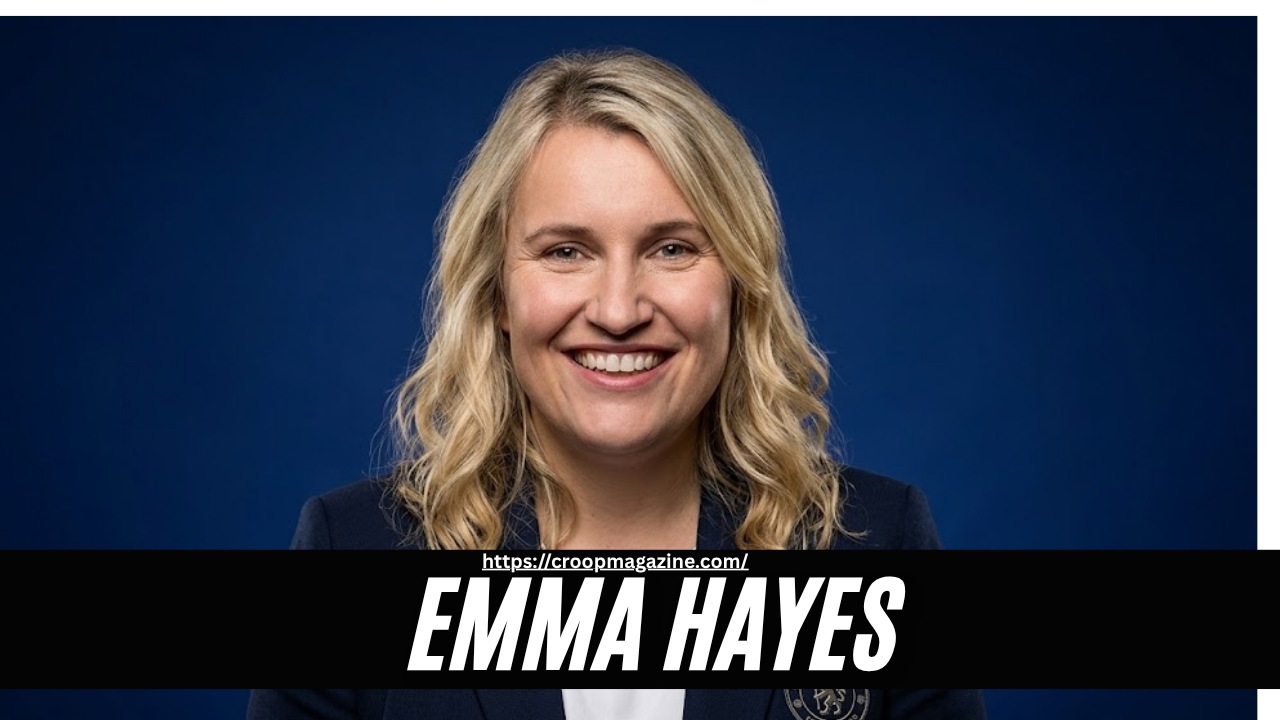
Emma Hayes stands among the most influential football managers of her generation, not because of a single achievement but because of what she built over time. Her career tells a story of resilience, adaptation, and long-term vision in a sport that has rapidly evolved around her. From early coaching roles in the United States to leading Chelsea Women through an era of domestic dominance, and now managing the United States Women’s National Team, Hayes has shaped modern women’s football in ways few others have matched.
Early Life and Football Foundations
Emma Carol Hayes was born on 18 October 1976 in Camden, London. Like many football figures in England, her early relationship with the sport began on local pitches and school teams. She joined Arsenal’s youth system as a player, operating mainly as a midfielder, where she developed her understanding of tactical discipline and positional awareness. However, her playing career did not progress into the professional level. A serious injury forced her out of the game earlier than expected. For many, that would have marked an exit from football. For Hayes, it became a turning point.
Rather than stepping away, she shifted her focus toward coaching and education. This transition is important because it shaped her identity as a manager who never relied on playing reputation. Instead, she built her authority through study, observation, and experience. She later studied sports-related subjects at Liverpool Hope University College, giving her a formal foundation in coaching principles and performance analysis. That combination of early setback and academic grounding would become a recurring theme in her coaching style: structured thinking, clear communication, and long-term planning.
Early Coaching Path and International Experience
Before becoming a household name in English football, Hayes spent significant time developing her craft in the United States. This period was crucial in shaping her understanding of player development and team management. She worked with the Long Island Lady Riders in the USL W-League, gaining early experience in senior coaching responsibilities. These environments were not high-profile, but they demanded adaptability. Resources were limited, and success depended heavily on coaching detail and player development rather than star power.
She later moved into college coaching, including roles with Iona University. College football in the United States requires a different mindset from professional environments. Coaches are responsible not only for tactics but also for shaping young athletes physically, mentally, and academically. Hayes developed a strong reputation for organization and communication during this time. By the time she returned to professional club football, she had already built a broad coaching foundation that blended European tactical thinking with American developmental systems.
Chicago Red Stars and Return to England
Hayes took a major step forward in her career when she became head coach of the Chicago Red Stars. This role placed her in a more competitive and visible environment, where expectations were higher and results mattered more immediately. Her time in Chicago gave her exposure to the early structure of women’s professional football in the United States. It also tested her ability to manage squads in transition, as the league itself was still developing. The experience reinforced her belief in structured coaching systems and clear identity within teams.
After her time in the United States, Hayes returned to England and joined Arsenal Women in a coaching capacity. This return was significant because it reconnected her with English football at a time when the women’s game was beginning to grow more competitive and professional. At Arsenal, she absorbed the culture of one of the strongest women’s clubs in England. But more importantly, she began to refine her own coaching philosophy—one that combined discipline, tactical flexibility, and psychological management.
Chelsea Women Appointment and Early Challenges
In 2012, Emma Hayes was appointed head coach of Chelsea Women. At that time, Chelsea were not yet the dominant force they would become. The Women’s Super League itself was still developing its identity, and the competitive balance across teams was more fluid than it is today. Hayes inherited a team with potential but without consistent dominance. Her early years were focused on building structure, recruitment strategy, and a playing identity. She emphasized squad depth, understanding that long seasons require more than just a strong starting eleven.
Her approach was methodical rather than explosive. Results improved steadily rather than immediately. But beneath the surface, Chelsea were becoming more organized, more resilient, and more difficult to break down.
Building a Winning Machine
As the years progressed, Chelsea began to reflect Hayes’ coaching philosophy more clearly. The team developed into a side known for controlled possession, aggressive pressing, and tactical discipline. Unlike teams that rely heavily on individual brilliance, Chelsea under Hayes functioned as a system. Players could rotate without major disruption to performance. That depth became one of their greatest strengths.
Her recruitment strategy also played a major role. Instead of focusing only on established stars, Chelsea built a blend of experienced internationals and emerging talent. This created continuity, allowing the club to remain competitive across multiple competitions each season. The result was sustained dominance rather than short-term success.
Domestic Dominance in England
Chelsea Women’s success under Emma Hayes became most visible through their record in the Women’s Super League.
They won:
- Multiple league titles across the 2010s and 2020s
- Seven Women’s Super League titles in total under her leadership
- Five consecutive league titles from 2020 to 2024
- Several FA Cups and League Cups
This level of consistency is rare in football, especially in a league that has become increasingly competitive. What made Chelsea stand out was not just winning titles but the manner in which they did it. Even in seasons where they faced injuries or squad rotation challenges, they remained at the top of the table. That consistency reflected coaching structure rather than short-term momentum.
European Competition and Champions League Journey
One of the defining challenges of Hayes’ Chelsea career was European competition. While domestic dominance came relatively consistently, the UEFA Women’s Champions League proved more difficult. Chelsea reached the final in 2021, a major milestone for the club and for Hayes personally. Although they did not win the title, the achievement marked their arrival among Europe’s elite clubs. Competing against teams with long-standing European experience highlighted the final step in Chelsea’s evolution. Hayes often described European success as the missing piece of their project.
Transition to the United States Women’s National Team
In 2023, Emma Hayes was appointed head coach of the United States Women’s National Team. She officially began her role in 2024 after concluding her final season with Chelsea. The appointment was widely seen as a major strategic move by U.S. Soccer. The national team had experienced a disappointing World Cup campaign, and the program was looking for structural reset and long-term direction. Hayes’ reputation for building systems rather than relying on individual talent made her a natural fit for this challenge.
Immediate Impact and Olympic Success
One of the most striking aspects of Hayes’ international career has been the speed of her impact. Within her first year, she led the United States to Olympic success in Paris 2024.
The tournament highlighted many of her coaching strengths:
- Strong defensive organization
- Controlled match management
- Tactical adaptability depending on opponents
- Emphasis on collective discipline
Winning a major international tournament so early reinforced her ability to transfer club-level success into international football.
Coaching Philosophy and Identity
Emma Hayes’ coaching style is built around structure, adaptability, and communication. She does not rely on fixed systems. Instead, she adjusts based on players available, opposition strength, and competition demands.
Her teams are typically:
- Highly organized defensively
- Flexible in attack
- Strong in transitions
- Deep in squad rotation
But beyond tactics, her biggest strength lies in leadership. Players often describe her as demanding but clear, someone who sets standards and maintains them consistently. She also places strong emphasis on psychology, understanding that performance is not only technical but also emotional and mental.
Legacy in Women’s Football
Emma Hayes has already secured a place in the history of women’s football. Her Chelsea era alone represents one of the most successful managerial periods in the modern game. But her influence goes beyond trophies. She helped elevate expectations around professionalism, coaching standards, and club structure in women’s football. Her move to international management suggests her influence is still expanding, not concluding.
Conclusion
Emma Hayes’ career reflects a rare combination of patience and ambition. She did not rush into success, nor did she rely on short-term momentum. Instead, she built systems that lasted. From her early coaching days in the United States to dominating English football with Chelsea and now leading the United States on the international stage, her journey shows how coaching can shape entire eras of the game. Her story is still being written, but her impact is already deeply embedded in modern women’s football.