Introduction
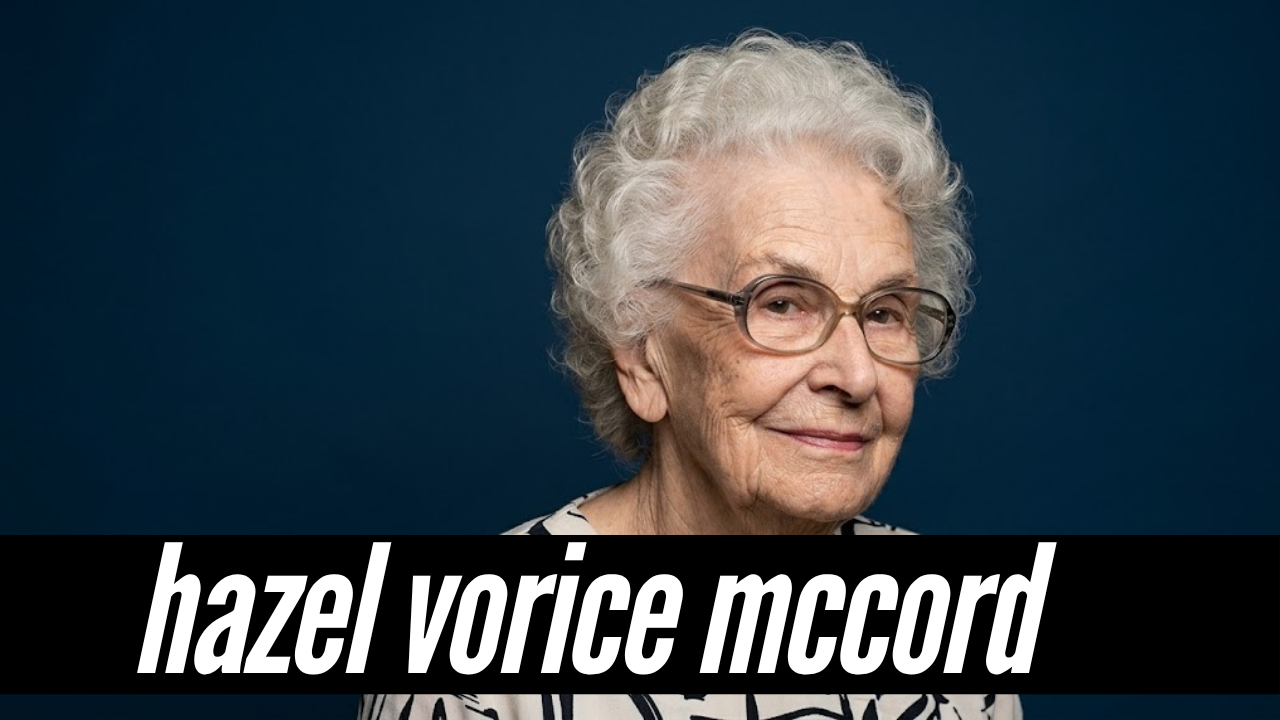
Hazel Vorice McCord is remembered today mainly through her connection to one of America’s most beloved entertainment families. She was the mother of Dick Van Dyke and Jerry Van Dyke, two actors who made a lasting impact on television and film history.
Although Hazel herself was not a public figure, her life has drawn attention because of the fame achieved by her sons. She represents a generation of American women whose lives were centered on family, responsibility, and resilience rather than public recognition.
Early Life and Background
Hazel Vorice McCord was born in 1896 in Illinois, United States, during a period when America was still largely rural and community-based. Life at that time was shaped by agriculture, small towns, and traditional family structures. Growing up in this environment meant that Hazel experienced a lifestyle very different from the modern world her descendants would later live in. Education for women was often limited, and most were expected to focus on home life and family responsibilities.
Hazel’s early years are not widely documented in public records, which is common for individuals of her generation who lived private, non-public lives. What is clear, however, is that she grew up with values rooted in discipline, hard work, and family stability—qualities that would later define her role as a mother.
Marriage and Family Life
Hazel married Loren Wayne Van Dyke, a traveling salesman. Their marriage reflected the typical American family structure of the early 20th century, where one partner worked outside the home while the other managed household life.
Together, they built a family in the Midwest, raising their children in Illinois. Life was not luxurious, but it was stable and centered around routine and responsibility. Their household eventually became the foundation for a family that would later become nationally recognized in entertainment.
Motherhood and Raising Her Children
Hazel Vorice McCord is most widely known for being the mother of two sons:
- Richard Wayne “Dick” Van Dyke
- Jerry Van Dyke
Her role as a mother was central to her life. She raised her children during a time when parenting was deeply hands-on and focused on structure, discipline, and moral guidance.
The family lived in Illinois, where the children grew up in a modest environment. Hazel managed the household while her husband’s work often required travel, meaning much of the daily responsibility of parenting fell on her. Despite limited financial resources, the family environment helped shape both sons in meaningful ways. Humor, storytelling, and resilience became key traits in the Van Dyke household.
Influence on Dick Van Dyke
Hazel’s most famous child, Dick Van Dyke, went on to become one of Hollywood’s most iconic performers. Known for his work in The Dick Van Dyke Show, Mary Poppins, and Chitty Chitty Bang Bang, he built a career defined by charm, physical comedy, and warmth. While Hazel was not involved in entertainment, her influence is often seen in the values and personality traits her son developed. Growing up in a structured but expressive home environment helped shape his sense of humor and creativity.
Dick Van Dyke has spoken in interviews and autobiographical reflections about his upbringing in Illinois, where family life played a key role in shaping who he became. Hazel’s presence in his early life provided emotional grounding during his formative years.
Influence on Jerry Van Dyke
Hazel’s younger son, Jerry Van Dyke, also became a successful actor and comedian. He appeared in television series such as Coach and built a respected career in comedy and acting.
Like his brother, Jerry grew up in a household that balanced discipline with humor. The environment created by Hazel and Loren Van Dyke encouraged both sons to explore performance and entertainment, even though it was not a traditional career path at the time. Both brothers eventually carried forward the Van Dyke name into American entertainment history.
Life as a Midwestern Mother
Hazel’s life in Illinois reflected the reality of early 20th-century American family life. It was a time before television, internet, or modern entertainment industries. Family life revolved around work, home, school, and community. She managed the household while her husband worked as a traveling salesman. This meant she often handled parenting responsibilities independently, maintaining structure and stability for her children.
Women of her generation were rarely recognized publicly for their contributions, but they played a crucial role in shaping future generations. Hazel’s life reflects this quiet but important contribution.
Later Life
Hazel Vorice McCord lived a long life and witnessed significant historical change. She saw the transformation of America from early industrial society into a modern entertainment-driven culture. As her sons became successful actors, she remained outside of public attention. Unlike many modern celebrity families, there was little media exposure of her personal life. She continued to live privately, focusing on family rather than public recognition.
Death and Final Years
Hazel Vorice McCord passed away in 1992 at the age of 95. Her death marked the end of a life that had spanned nearly a century of American history. Her passing came during a time when her son Dick Van Dyke was already a well-established Hollywood figure with decades of success behind him.
There is no widely documented public cause of death in mainstream entertainment sources, which is consistent with her private lifestyle and non-celebrity status. She was laid to rest in the United States, with her memory preserved primarily through genealogical records and family history documentation.
Grandchildren and Family Legacy
Hazel Vorice McCord’s legacy extends far beyond her own lifetime through her descendants. Her grandchildren include the children of Dick Van Dyke and Jerry Van Dyke, many of whom have lived private lives, while others have had varying levels of public recognition.
Through her sons, Hazel also has great-grandchildren, continuing the Van Dyke family lineage into modern generations. While not all family members are publicly known, the Van Dyke family remains an important part of American entertainment history.
Connection to Entertainment History
Although Hazel herself was never part of the entertainment industry, her family became deeply connected to it. Her sons helped define American television comedy across several decades. Dick Van Dyke’s performances in particular are considered classics of American entertainment.
This connection places Hazel indirectly within Hollywood history—not as a performer, but as part of the family background that shaped two major actors. Her role is often viewed as foundational rather than public-facing.
Why Hazel Vorice McCord Is Remembered
People continue to search for Hazel Vorice McCord because of curiosity about the family behind Dick Van Dyke. As his career remains influential, interest in his early life and upbringing continues. However, information about Hazel is limited because she lived in a time before modern media documentation. Her life was not recorded in interviews or public appearances, making historical records the primary source of information. Despite this, her role as a mother and her influence on her children ensure her continued relevance in family history discussions.
Legacy
Hazel Vorice McCord’s legacy is not defined by fame, but by family. She represents a generation of women whose contributions were deeply personal rather than public. Through her children, she indirectly influenced American entertainment culture. The success of Dick Van Dyke and Jerry Van Dyke reflects the environment and values she helped create. Her life story is a reminder that many influential figures in history are not the ones in the spotlight, but those behind the scenes shaping future generations.
Conclusion
Hazel Vorice McCord lived a long, meaningful life rooted in family, tradition, and resilience. Born in 1896 and passing away in 1992, she witnessed nearly a century of change in American society. While she did not seek public recognition, her legacy lives on through her sons, who became important figures in television and film history. Her story reflects the quiet strength of early American motherhood and the lasting impact of family influence across generations.