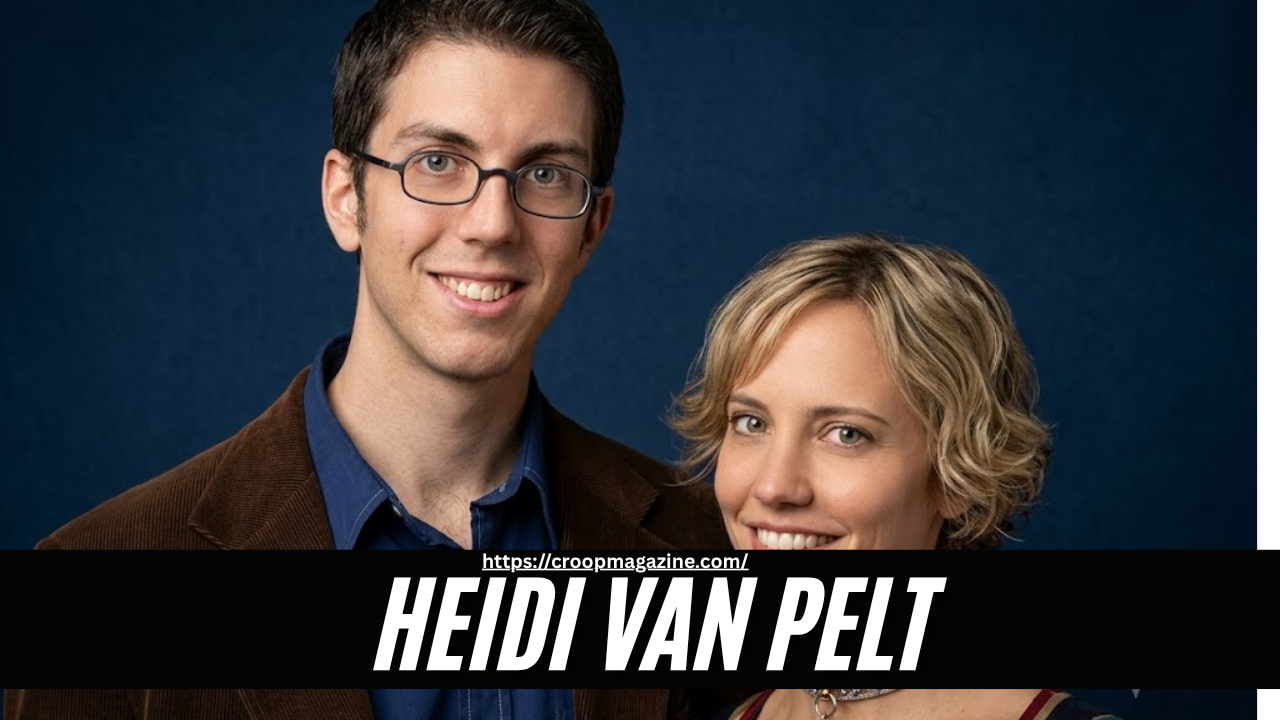
Heidi Van Pelt’s name often appears in search results tied to two very different worlds: early vegan food entrepreneurship and early 2000s celebrity media coverage. That overlap is what makes her biography so widely searched and frequently misunderstood. She is not a traditional entertainment figure, nor is she simply defined by her marriage. Instead, her story sits in a quieter but more interesting space where food culture, alternative nutrition, and media attention briefly collided.
Understanding her life means separating public perception from professional reality. The headlines focused on her marriage to former child actor Taran Noah Smith, but her actual work centered on vegan food development and early plant-based product experimentation at a time when the industry was still in its early stages.
Early life and background in the United States
Heidi Van Pelt was born in the United States in 1968, growing up in Missouri. Her early life was not connected to entertainment or celebrity culture, and she did not come from a public-facing industry background. Instead, she developed within a more private environment that later shaped her independent approach to work and lifestyle. While detailed public records about her early upbringing are limited, what is consistently understood is that she developed an interest in nutrition, wellness, and food-based health practices early in life. This interest would later evolve into her professional direction.
Her background did not follow a conventional culinary school-to-restaurant path. Instead, it leaned toward alternative food thinking, particularly plant-based nutrition, which was still far less mainstream in the United States during her early adult years. That early curiosity about food systems and health choices became the foundation of her later career in vegan food development.
Entry into vegan food culture and nutrition work
Before entering public awareness, Heidi Van Pelt was already working within vegan and plant-based food environments. Her focus was not just cooking, but also understanding how ingredients could be restructured to replace animal-based products. At the time she began this work, vegan food culture in the United States was still niche. Plant-based milk, dairy alternatives, and vegan cheese products were not widely available in supermarkets. Most innovation in this space came from small-scale experimentation rather than large food corporations.
Her work aligned with this early experimental phase. She became involved in developing plant-based recipes and food alternatives, particularly focusing on non-dairy formulations. This included working with nut-based ingredients such as cashews, which were often used to replicate creamy textures in vegan cooking. This period of her life is important because it shows her career direction before media attention ever entered the picture. She was already working in a space that would later become a major industry, but at the time it was still small, underdeveloped, and largely community-driven.
How her public profile changed in the early 2000s
Heidi Van Pelt’s public visibility changed significantly when she met actor Taran Noah Smith. Smith was best known for his role as Mark Taylor on the television sitcom Home Improvement, a show that made him widely recognizable as a child actor in the 1990s. Their relationship became public in the early 2000s and quickly attracted media attention. The main reason was not professional overlap but personal contrast. Smith was transitioning out of childhood acting, while Van Pelt was working in an unrelated field of vegan food entrepreneurship.
The relationship was widely reported in entertainment media, not because of industry collaboration, but because of the unusual pairing and age difference. That media framing became a defining feature of how she was portrayed in public narratives. Instead of being introduced primarily as a vegan chef or entrepreneur, she was often introduced through her relationship status. That shift had a lasting effect on how her name was perceived online and in entertainment reporting.
Marriage to Taran Noah Smith and media attention
Heidi Van Pelt and Taran Noah Smith married in 2001. At that time, Smith had recently reached adulthood after years of working as a child actor on television. The marriage immediately drew attention due to the age gap between them and Smith’s previous fame. Media coverage focused heavily on their relationship dynamics. This included discussions of their personal lives, living arrangements, and later their business collaboration. However, much of this coverage did not deeply engage with Van Pelt’s professional background in vegan food development.
Instead, her identity in public reporting became closely tied to the marriage itself. This is a pattern often seen when one partner has prior fame and the other does not operate within mainstream celebrity systems. Despite the attention, the couple stepped away from traditional Hollywood environments and pursued a more independent lifestyle. This included working on food-related business ideas that aligned with Van Pelt’s interest in vegan nutrition.
Playfood and early vegan entrepreneurship
One of the most significant parts of Heidi Van Pelt’s career was her involvement in a vegan food venture known as Playfood. This business was developed with Taran Noah Smith and focused on plant-based food production. Playfood centered on creating vegan alternatives to dairy products, particularly cheese substitutes made from nuts such as cashews. At the time, vegan cheese options were not widely available commercially, and most products were still in early stages of development.
The business represented an early attempt to move vegan food ideas from home experimentation into structured production. It reflected a broader shift that would later become a major global industry, but at the time it was still relatively niche. Playfood gained attention partly because of Smith’s celebrity background, which brought visibility to an otherwise small-scale vegan food project. However, the business also faced internal challenges that later became part of public reporting.
Business challenges and separation of paths
As with many small founder-led ventures, Playfood experienced operational and financial difficulties. Public accounts suggest that disagreements emerged between the co-founders regarding business direction and management. These issues became more complicated as the couple’s personal relationship also evolved. The overlap between business partnership and marriage created additional pressure, which eventually contributed to the breakdown of both.
While detailed financial records are not publicly available, reporting from the period indicates that disputes over business control and direction played a role in the eventual separation of their partnership. This stage of her life reflects a common reality in early-stage entrepreneurship: when personal and professional roles overlap, conflicts often become harder to separate cleanly.
Divorce in 2007 and the end of Playfood
Heidi Van Pelt and Taran Noah Smith divorced in 2007 after several years of marriage. The end of the relationship also marked the end of their shared business involvement. Following the divorce, Playfood ceased operations. The closure of the business effectively ended their joint entrepreneurial work in vegan food production.
Media coverage at the time focused heavily on the personal and legal aspects of the separation. However, from a professional standpoint, it also marked the end of Van Pelt’s most visible public business venture. After this period, she gradually stepped away from public attention.
Life after public attention
Following the divorce, Heidi Van Pelt did not continue in a high-profile media or entertainment-facing role. Instead, she moved into a lower-visibility phase of life. Some reports suggest continued involvement in vegan food or nutrition-related interests, but without major public-facing branding or commercial expansion. Unlike many individuals who gain visibility through entertainment-related stories, she did not maintain a long-term public persona. This retreat from visibility contributed to the limited amount of recent public information available about her. Her name remains more connected to earlier phases of her life rather than ongoing activity.
Public perception and media framing
Heidi Van Pelt’s public image has been shaped more by media framing than by her own professional output. During the early 2000s, entertainment reporting often emphasized personal relationships over independent career identity, especially for individuals connected to celebrity figures.
As a result, her work in vegan food development was frequently overshadowed by coverage of her marriage. This created a long-lasting imbalance in how her name is recognized in search results and public memory. Over time, however, her involvement in early vegan entrepreneurship has gained more recognition in retrospective discussions about the development of plant-based food culture in the United States.
Why her story still attracts attention
Interest in Heidi Van Pelt continues for two main reasons. The first is her connection to a well-known former child actor, which places her within a recognizable entertainment narrative. The second is her early involvement in vegan food development, which aligns with growing public interest in the history of plant-based industries.
Her story is often revisited not because of ongoing public activity, but because it reflects a transitional moment in both food culture and media culture. Early vegan entrepreneurship and early 2000s celebrity reporting intersect in a way that keeps her name circulating online.
Conclusion
Heidi Van Pelt’s life story is best understood through context rather than headlines. She was involved in early vegan food experimentation at a time when the industry was still developing, and she later became part of a widely reported entertainment narrative due to her marriage to Taran Noah Smith.
Those two elements combined to create a public identity that often oversimplifies her actual work. While media attention focused heavily on personal aspects, her professional involvement in plant-based food development represents a more grounded and often overlooked part of her biography. Her story continues to appear in searches today not because it is actively unfolding, but because it sits at the intersection of cultural memory, early vegan industry history, and entertainment-era media coverage.