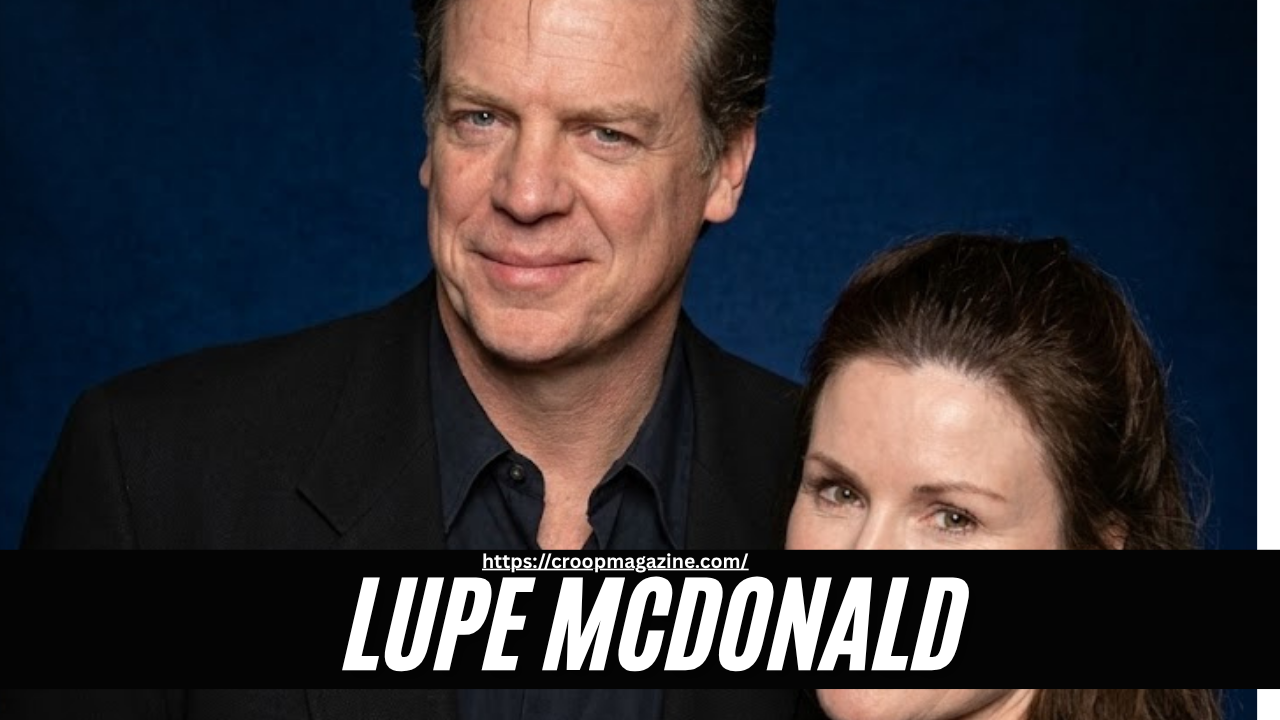
Lupe McDonald is one of those names that appears in Hollywood searches not because of constant public visibility, but because of steady curiosity around the personal lives of long-working actors. She is best known as the wife of actor Christopher McDonald, a familiar face in American film and television. But that label only tells part of the story.
Her own background includes work as a model and actress, with appearances in creative projects that sit outside mainstream celebrity culture. Unlike many public figures tied to Hollywood spouses, she has chosen a life that remains largely private, even while being connected to one of the most recognizable character actors of his generation.
Early life and background
Lupe McDonald was born Maria Guadalupe Gidley in the United States. Her early life is not heavily documented in public media, which is common for individuals whose careers begin outside mainstream Hollywood systems. What is consistently understood is that she entered creative work through modeling and performance-based opportunities rather than through traditional film industry pipelines.
Her early years reflect a gradual movement toward visual and performance arts. Instead of a direct entry into major studio acting, she developed through smaller creative spaces where modeling, short-form appearances, and music-related visual projects were more common. This background shaped the direction of her later work. It positioned her closer to independent and experimental screen appearances rather than large-scale commercial film roles.
Entry into modeling and performance work
Before becoming widely known through her marriage, Lupe Gidley worked as a model and appeared in visual media projects. This included participation in creative productions that blended music, performance, and visual storytelling. One of her earliest documented appearances is in a well-known music video project from the late 1980s. At that time, music videos were becoming a major cultural format, offering opportunities for models and emerging performers to gain screen experience without traditional film or television roles.
Her involvement in this space reflects the broader entertainment environment of the era, where music television and experimental visual projects often served as entry points into the industry. Rather than building a traditional acting résumé, her early career followed a more fragmented but creative path.
Acting appearances and screen credits
Lupe McDonald’s screen career is relatively limited in scale but still clearly documented. Her most recognizable early credit is her appearance in Billy Joel’s music video “We Didn’t Start the Fire,” released in 1989. That video became widely known for its rapid historical montage format and remains culturally referenced decades later. Later in her career, she appeared in a small number of film and visual projects that continued into the 2000s and beyond. These include experimental or independent productions rather than mainstream Hollywood features.
Her screen presence was never centered on long-running roles or television series. Instead, it consisted of occasional appearances that reflected a selective approach to acting work. This type of career is not unusual in entertainment, especially among performers who also maintain parallel personal or professional lives outside the industry. What stands out is consistency in style rather than volume. Her credits show a preference for creative participation over sustained industry positioning.
Meeting Christopher McDonald
Lupe Gidley met actor Christopher McDonald in 1989 while both were involved in a theatre production in New Mexico. That meeting is often referenced in biographies of McDonald because it marked the beginning of a long-term relationship that would become one of the more stable partnerships in Hollywood circles.
At the time, McDonald was already building his acting career, while Lupe was engaged in creative performance work. Their connection formed through shared artistic environment rather than through Hollywood social events or industry networking. That origin is important because it places their relationship in a working creative context rather than a celebrity-driven one. It also helps explain the durability of their partnership, which has lasted for decades.
Marriage and family life
Lupe Gidley and Christopher McDonald married in 1992. Over time, they built a family together and raised four children. Their children are rarely discussed in public media, reflecting the couple’s preference for privacy in family matters. Christopher McDonald’s career has included extensive film and television work across decades, often in supporting or character roles that keep him consistently active in Hollywood. Throughout that time, Lupe has remained outside the spotlight, focusing primarily on family life rather than public-facing work.
Their marriage is notable for its longevity. In an industry where long-term relationships are often affected by travel schedules, public attention, and professional demands, their partnership has remained stable since the early 1990s. That stability has contributed to how Lupe is described in public profiles—less as a standalone celebrity and more as a long-term partner within a sustained family structure.
Life outside Hollywood spotlight
One of the defining features of Lupe McDonald’s public identity is her distance from media attention. While she has documented screen appearances, she has not pursued ongoing visibility in entertainment reporting or interviews. This separation is significant. Many individuals connected to actors eventually build public-facing careers of their own, whether in media, business, or entertainment. Lupe McDonald did not follow that path.
Instead, she maintained a private life alongside a partner who remained active in Hollywood. That choice has shaped how little information is publicly available about her current activities. It also explains why most searches about her are tied to her husband rather than her own ongoing work.
Public perception and association with Hollywood
Lupe McDonald’s public identity is primarily shaped by association. Christopher McDonald’s long career in film and television naturally draws attention to his personal life, and as a result, she is frequently searched in connection with his name. However, this association should not overshadow her own documented creative background. Her early modeling work and screen appearances place her within entertainment history, even if on a smaller scale. Her biography reflects a common pattern in Hollywood families: one partner maintains high public visibility, while the other remains largely private, even if they have participated in the same industry at different levels.
Understanding her place in entertainment culture
Lupe McDonald’s career does not follow the structure of a traditional Hollywood actor’s trajectory. Instead, it reflects intermittent participation in creative work combined with long-term focus on personal life. Her appearances in music videos and smaller screen projects show engagement with performance art, but not a continuous industry career. That distinction is important when placing her within entertainment history.
She represents a category of performers whose work exists in smaller, sometimes overlooked corners of visual media—spaces that contribute to culture without always generating celebrity recognition.
Why her name continues to appear in searches
Interest in Lupe McDonald continues largely because of her connection to Christopher McDonald, whose long-standing film career keeps him visible to new audiences. As viewers discover his work, they often search for information about his family background.
Another factor is the lasting cultural presence of her early music video appearance, which remains part of widely circulated pop culture history. Combined with her long marriage, these elements sustain search interest over time. Even without active media presence, her name remains part of entertainment databases and biographical references due to these connections.
Conclusion
Lupe McDonald’s biography is not defined by constant publicity or a large body of widely known acting roles. Instead, it is shaped by selective creative participation, early modeling and screen appearances, and a long-term private family life with actor Christopher McDonald.
Her story highlights a different side of entertainment culture—one where not all participants seek visibility, and where professional work can exist alongside a deeply private personal life. While she is often referenced through association, her documented contributions to visual and performance media confirm her presence within the broader landscape of entertainment, even if outside mainstream recognition.