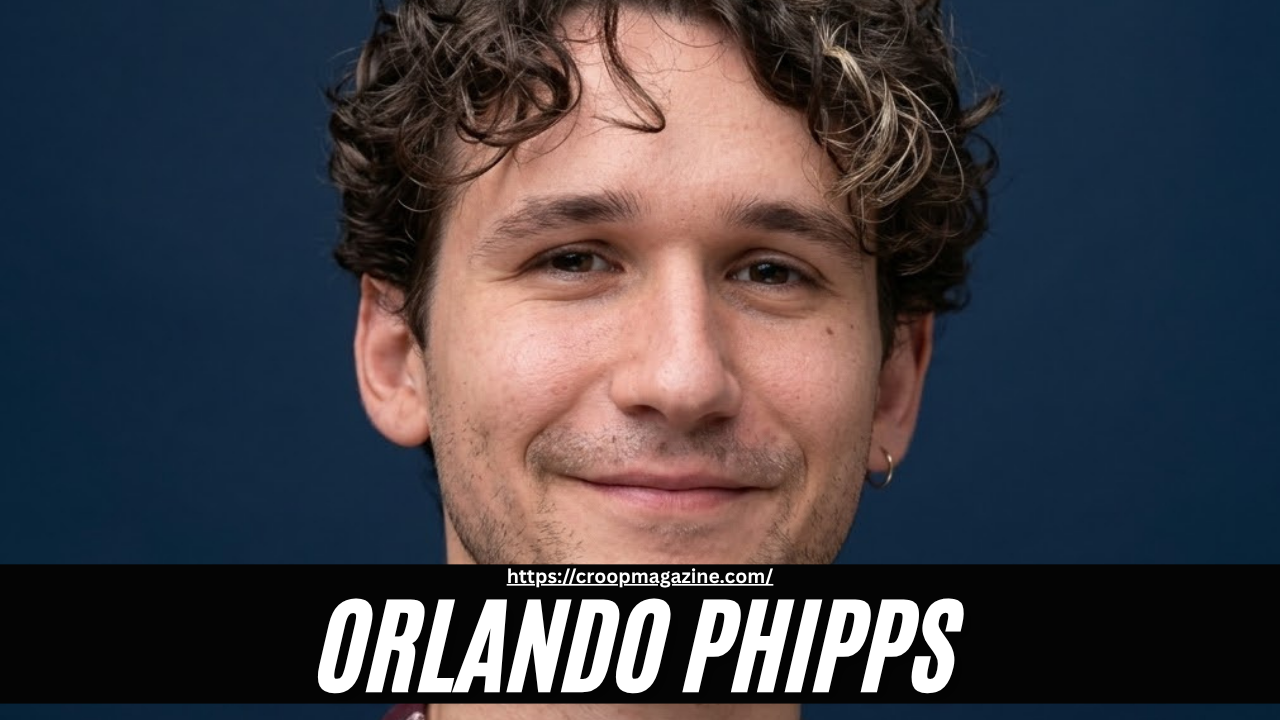
Orlando Phipps is not a celebrity in the traditional sense, nor is he a public entertainer or media personality. Yet his name has appeared in public searches and media coverage due to one defining connection: he is the son of British actress Haydn Gwynne, one of the most respected stage and screen performers of her generation.
Unlike many children of well-known actors who step into public careers, Orlando has remained largely outside the entertainment world. His life story is shaped less by personal fame and more by family legacy, privacy, and a brief moment of public attention following a major theatre award ceremony in 2024. Understanding Orlando Phipps means understanding the intersection between private life and public recognition—where personal identity exists quietly, even while a family name carries cultural weight.
A childhood rooted in two worlds
Orlando Phipps was born in the United Kingdom in the late 1990s into a household shaped by two very different professional worlds. His mother, Haydn Gwynne, built a distinguished career in British theatre, television, and film. She was known for her sharp stage presence, versatility, and long-standing contribution to West End productions. Her work earned her critical acclaim across decades and placed her among the most respected British performers of her era.
His father, Jason Phipps, is a psychoanalyst. His professional background is rooted in psychology and clinical practice rather than the performing arts. This created a family environment where creative expression and analytical thinking coexisted. Orlando also grew up alongside his brother, Harrison Phipps. Together, they were raised in London in a household that, despite public recognition through their mother, remained relatively private and protected from media attention.
Growing up around theatre, but not inside it
Being the child of a successful actress often brings assumptions about early exposure to acting or entertainment careers. In Orlando’s case, however, there is no public record suggesting involvement in performance work or a move toward the entertainment industry.
Instead, his upbringing appears to have been intentionally separated from public visibility. While Haydn Gwynne’s career involved stage performances, television appearances, and awards recognition, her family life remained largely out of the spotlight. This separation is important. It reflects a conscious boundary often maintained by performers who wish to protect their children from media pressure. In Orlando’s case, that boundary seems to have remained intact throughout most of his life.
A private identity in a public family
Orlando Phipps represents a growing pattern among children of public figures: individuals who are known not for their own careers, but for their connection to someone famous.
Unlike celebrity culture where visibility is often pursued, Orlando’s public presence is minimal. There are no verified records of entertainment roles, interviews, or public-facing professional activity tied to his name.
Instead, his identity exists primarily through family references—particularly in profiles, obituaries, and theatre-related coverage of his mother’s career.
This kind of public recognition is indirect. It does not define personal achievement, but rather family association.
The influence of Haydn Gwynne’s career
To understand why Orlando’s name appears in public discussion, it is necessary to understand the scale of his mother’s career. Haydn Gwynne was widely regarded as one of Britain’s strongest stage actresses. She worked extensively in theatre and television, earning nominations for major awards and recognition for both comedic and dramatic roles.
Her performances in productions such as Billy Elliot the Musical and The Windsors contributed to a career that spanned decades. She was especially respected in the theatre world, where consistency, range, and professionalism define long-term success. Her influence extended beyond individual roles. She was part of a generation of actors who helped shape modern British stage performance, balancing mainstream television work with serious theatrical contributions. For Orlando, this legacy forms the backdrop of his public association, even though he is not a performer himself.
Family life and private upbringing
Public information about Orlando’s childhood is limited, and that in itself is significant. In a media environment where personal details are often widely shared, the absence of detail suggests a deliberate preference for privacy. What is known is that he was raised in London alongside his brother in a stable family structure. His mother’s acting career meant exposure to the creative world, but not necessarily participation in it.
This distinction matters. Exposure to an industry does not automatically translate into involvement in it. Many children of actors grow up behind the scenes, observing rather than performing. Orlando’s life appears to follow that pattern.
The impact of loss and public attention in 2023
In October 2023, Haydn Gwynne passed away after being diagnosed with cancer. Her death was widely reported in the UK, with tributes coming from the theatre and television communities. This moment marked a shift in public awareness of her family. While she had maintained a relatively private personal life, her passing brought attention to those closest to her, including her sons Orlando and Harrison.
In situations like this, families often experience a brief period of public visibility. Media coverage focuses on legacy, remembrance, and professional achievements, which naturally extends attention to immediate relatives. For Orlando, this was the first time his name became widely visible outside theatre-related circles.
The Olivier Awards 2024 moment
The most documented public appearance involving Orlando Phipps occurred in 2024 at the Olivier Awards, one of the most prestigious events in British theatre. At the ceremony, Haydn Gwynne was posthumously awarded for her performance in When Winston Went to War with the Wireless. Her sons, Orlando and Harrison, appeared on stage to accept the award on her behalf.
This moment carried emotional weight. It was not a celebrity introduction or public debut in the entertainment industry. It was a tribute moment—representing family presence at a recognition of artistic achievement. The appearance briefly placed Orlando in the public eye, but it did not change his private status or suggest a move into media or performance work.
Media attention and interpretation
Following the Olivier Awards appearance, media outlets focused on the emotional nature of the tribute rather than Orlando as an individual public figure. Coverage highlighted the significance of the award and the legacy of Haydn Gwynne’s work. Orlando’s role was understood in context: a family representative accepting recognition, not a performer stepping into public life. This distinction is important. Public visibility does not always equal public career. In Orlando’s case, the attention was situational rather than ongoing.
Education and professional direction
There is no verified public information about Orlando Phipps pursuing a career in acting, television, or entertainment. Likewise, details about his education and professional life remain private. This absence of information is not unusual for individuals who choose to remain outside public industries. Many children of public figures actively avoid media exposure to maintain normal professional and personal lives. Based on available information, Orlando appears to fall into that category—someone with a private life rather than a public career path
Conclusion
Orlando Phipps exists in a space between public recognition and private life. His name is known not because of personal fame, but because of a respected artistic legacy carried by his mother, Haydn Gwynne. His brief appearance at the Olivier Awards brought him into public view, but it did not redefine his identity. Instead, it highlighted something more common than people often realize: not everyone connected to fame chooses to live within it. His story is ultimately one of privacy within visibility—where a name appears in public conversation, but a life remains intentionally outside it.