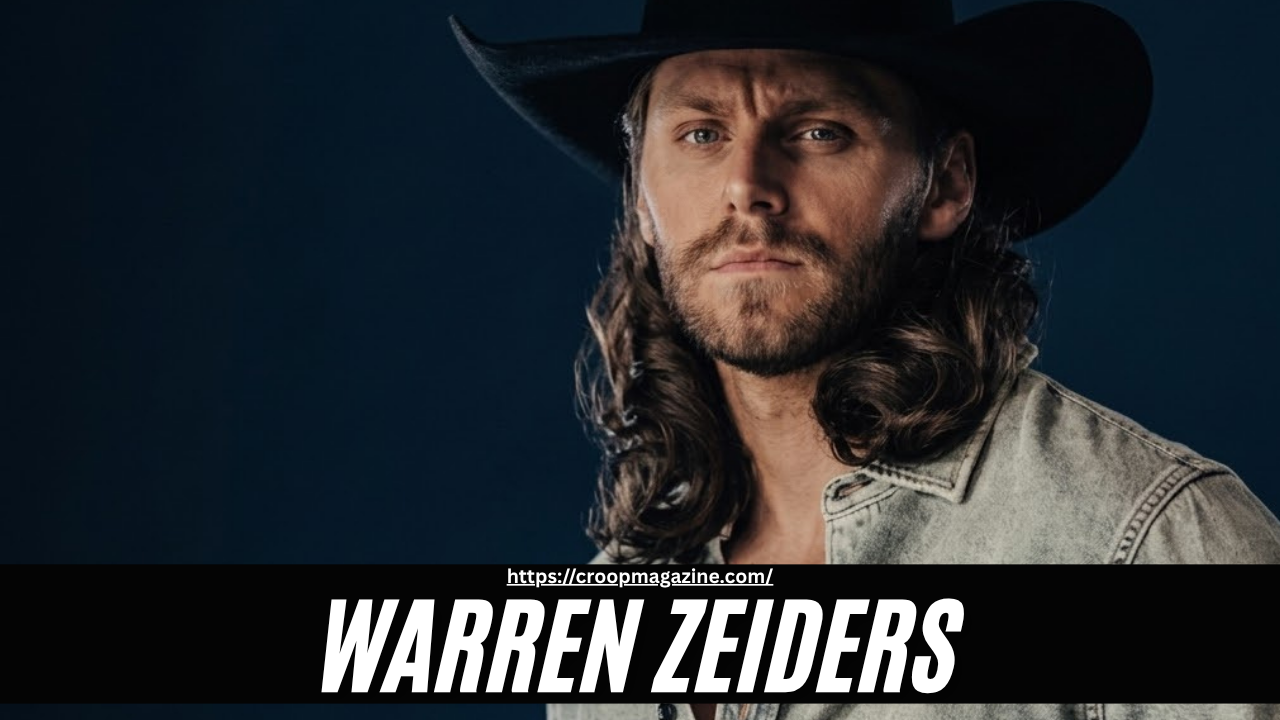
Warren Zeiders didn’t follow the traditional Nashville blueprint. His path into country music didn’t begin with industry connections or years of small club performances. Instead, it started with a phone, a few acoustic recordings, and a voice that quickly caught attention far beyond what he expected.
What makes his story stand out is how fast things moved. One moment he was a college student balancing sports and studies, and the next he was watching millions of people engage with his music online. That shift didn’t just change his career — it reshaped his entire direction in life. Today, Zeiders is part of a new generation of country artists who built audiences first and then entered the music industry, not the other way around.
Early life in Pennsylvania
Warren Zeiders was born in 1999 in Hershey, Pennsylvania, a town better known for chocolate than country music careers. He grew up in a stable environment where sports and school played a major role in his early identity. Like many young athletes, he spent much of his teenage life focused on competition and structure. Music was present, but not as a career goal. It was more of a personal outlet, something secondary to sports and academics.
This background is important because it shaped his discipline. Even though he eventually left athletics behind, the mindset carried over into how he approached music later on — consistent, focused, and self-driven.
A future originally built around sports
Before music entered the picture seriously, Zeiders was deeply involved in lacrosse. It wasn’t a casual hobby; it was a serious athletic pursuit that required training, commitment, and long-term planning. For a time, it looked like sports might define his future. But an injury changed that trajectory. Instead of continuing down a competitive athletic path, he was forced to rethink what came next. That moment is often where many careers shift direction. For Zeiders, it became the turning point that quietly opened the door to music.
College years and early uncertainty
After high school, he attended Frostburg State University, where he studied business. Like many students, he wasn’t fully certain what career he wanted long-term. During this period, music still wasn’t a formal plan. It existed in the background. He would record songs casually, experiment with guitar, and share small clips without expecting any real outcome. There was no industry pressure yet. No label meetings. No strategy. Just exploration. But sometimes that kind of space is exactly what allows talent to surface naturally.
The start of something online
The turning point came when he began posting short acoustic performances online. These weren’t highly produced tracks. They were simple, direct, and often emotionally raw. One particular early song began gaining attention quickly across social platforms. People connected with the tone of his voice — rough, unpolished, and emotionally direct. It didn’t sound manufactured. It sounded real. authenticity became the core of his early appeal. As engagement grew, so did curiosity. Listeners weren’t just reacting to one clip — they were searching for more.
Viral momentum and unexpected attention
The song that changed everything was an early version of “Ride the Lightning.” It spread rapidly through social media platforms and began generating millions of views and streams. What made it different wasn’t just popularity — it was speed. The growth happened in a short period, pulling him into a space where music was no longer a side interest. At this point, he wasn’t just a student posting songs online. He was becoming an emerging artist with a real audience forming around his work. That shift is something many modern musicians experience, but few experience it this quickly.
Moving into the professional music world
As attention increased, the next step became inevitable. The online success translated into industry interest, leading to a major-label signing with Warner Records. This moment marked a transition from independent creator to professional recording artist. But even after signing, his style didn’t change drastically. Instead of polishing away the raw edges that made him popular, the focus stayed on preserving that emotional directness while improving production quality. That balance — between raw and refined — became a defining feature of his sound.
The 717 Tapes era
Before full studio albums, Zeiders built his catalog through a series of releases known as the “717 Tapes.” These projects included acoustic-driven tracks that felt personal and stripped back. Rather than chasing radio formulas, these songs leaned heavily into storytelling. Breakups, regret, emotional conflict, and personal reflection were recurring themes. This phase mattered because it helped establish identity. Fans weren’t just listening to singles — they were following a developing artistic voice. The “717 Tapes” releases created a foundation that would later support his mainstream success.
Breaking into mainstream country music
The real commercial breakthrough came with “Pretty Little Poison.” This track marked a major shift in his career because it crossed from streaming success into radio success. It didn’t just perform well online — it reached the top of country radio charts, making him a recognized name in mainstream country music. This moment changed how the industry viewed him. He was no longer just a viral artist. He was now a charting country musician with broad audience reach. That transition is difficult for many online-born artists. Zeiders managed to cross that gap successfully.
A growing catalog of music
Following his breakout, he continued releasing full-length projects and albums, including a self-titled direction through Pretty Little Poison and later material such as Relapse. Across these releases, a pattern became clear. His music consistently focuses on emotional honesty rather than complex production. Instead of trying to reinvent his sound with each release, he refined it. The evolution is subtle — better production, stronger structure — but the core identity remains stable. That consistency is one reason his audience continues to grow.
Touring and live performance energy
As streaming numbers increased, live performances became a major part of his career. Touring allowed him to move beyond screens and directly connect with audiences. His shows are known for high energy and strong vocal delivery, often closely matching the emotional intensity of his recordings. Live music also reinforced his identity as a performer rather than just a studio artist. Many fans discovered him online, but stayed because of live experiences.
Musical style and influences
Zeiders’ music sits within modern country, but it doesn’t stay strictly within traditional boundaries. There are elements of rock influence in his vocal tone and delivery, and a strong storytelling tradition in his lyrics His songs tend to focus on emotional situations rather than abstract themes. Relationships, loss, frustration, and personal reflection are central topics What stands out most is vocal texture. His voice carries a roughness that adds weight to the lyrics, making even simple lines feel emotionally charged.
Public image and connection with fans
Unlike heavily curated pop personas, Zeiders maintains a more grounded public image. Much of his early audience came through direct interaction on social media, and that connection remains part of his identity. Fans often describe his appeal in simple terms — honesty, emotion, and relatability. He doesn’t rely on spectacle. The focus stays on the music. That kind of connection is especially important in modern country music, where authenticity often matters as much as production quality.
Where his career is heading
Zeiders is still early in his long-term career, but his trajectory suggests continued growth in both streaming and live performance spaces. The challenge ahead is consistency — maintaining emotional authenticity while expanding creatively. Many artists who rise quickly face pressure to shift sound or direction. So far, he has stayed close to his original style. That stability may be one of the reasons his audience continues to grow rather than fragment.
Conclusion
Warren Zeiders’ career shows how music discovery has changed. Instead of starting inside the industry, he built an audience first and entered the system later. His rise reflects a shift where authenticity and online connection can matter as much as traditional industry pathways. As his career continues, his challenge is not starting momentum — but sustaining it while staying true to the sound that brought listeners in the first place.